Created from a single voice note with Agent Craft
Most execs are handing their competitors free reach, out of fear. The…
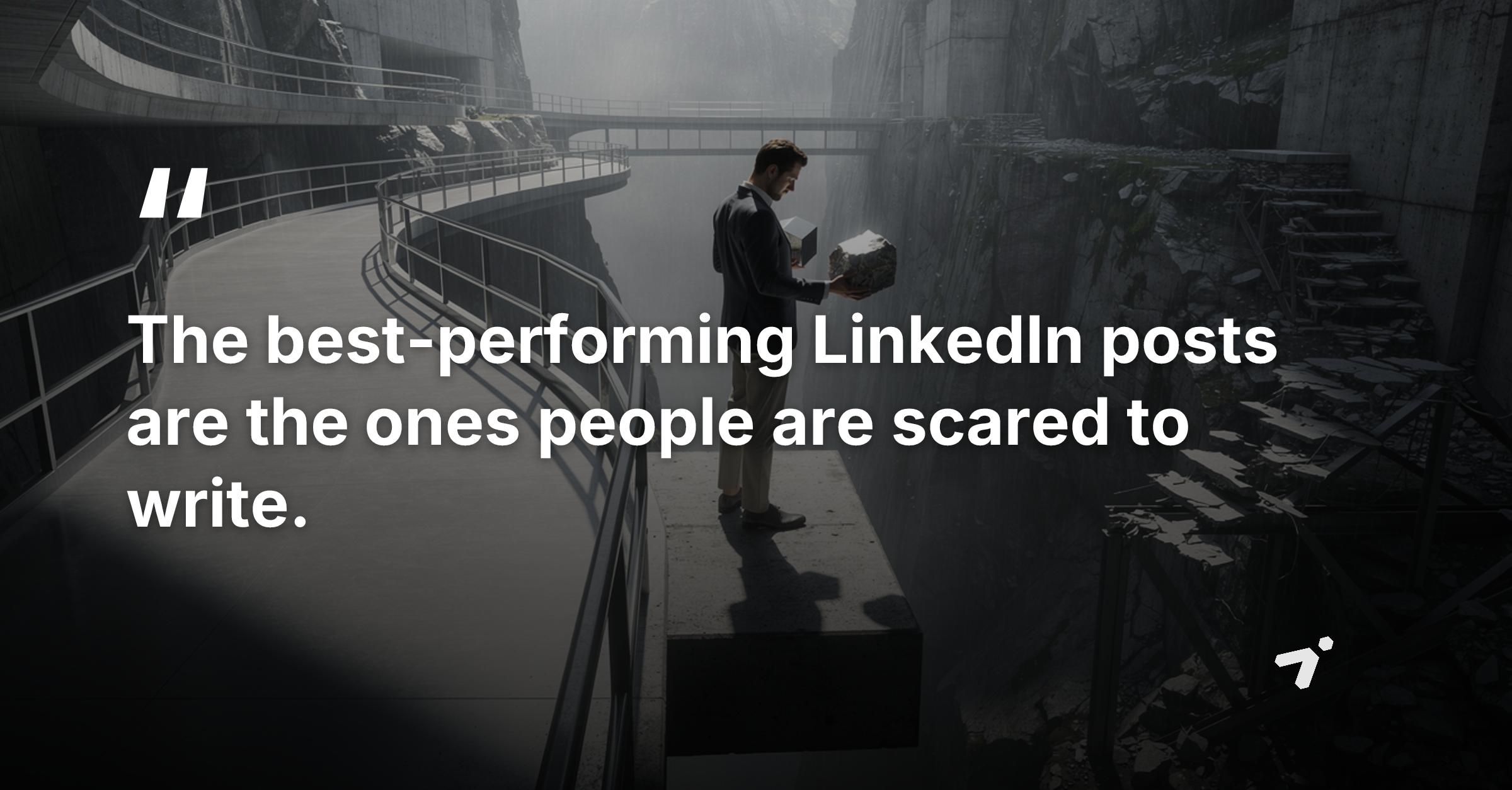
Most execs are handing their competitors free reach, out of fear. The best-performing LinkedIn posts are the ones people are scared to write. Here's the split we keep seeing. Most execs won't post at all because they worry it'll hurt their standing. The ones who do post default to the safe stuff: "I'm thrilled to announce," "I want to welcome Sarah to the team." Nothing that risks a real opinion. And yet the posts that actually get reach are the honest ones. The hard problem you're stuck on. The thing that didn't work. The disagreement you're willing to put your name next to. So we're curious where you land. If you had to pick one, which post gets more reach from a professional audience? The polished announcement, safe and on-brand, that draws a few likes and zero replies. Or the messy, opinionated take on the hard problem you're working through, the one some people will disagree with. The second wins almost every time, and it's not close. The fear of the second kind is exactly why LinkedIn stays so underused. Fewer people post real insight. So the few who do get disproportionate reach. That's the whole game, and most people are giving it away.
More content from Agent Craft
- X (Twitter)My mentor thinks AI just makes us efficient. Musk thinks money goes obsolete. Both miss the point. AI covers your gaps and you scale at a rate you couldn't before. — James, co-founder @ Agent Craft Powered by Agent Craft 🎙️→📱
- InstagramMost content bottlenecks aren't a writing problem. They're an origin problem. The idea has to start with a person. A CEO who knows why this quarter matters. A founder who can explain the actual reason a customer stayed. That thinking can't be faked, and honestly it shouldn't be. What can be handed off is the drudgery: the polishing, the formatting, the reshaping of one thought into a week of posts. So here's the split worth borrowing, whether you use Agent Craft or not. Give your executives one job. They receive a prompt tied to a live campaign, then speak to it, briefly, in whatever format costs them the least friction. No blank document, no calendar block they'll cancel, no "I'll get to it Friday." Just talk about something they already know cold. Everything downstream runs on context you set once. Before a single post gets written, the brand's voice, DNA, strategy, and campaign goals get loaded in. So when that raw input comes back, the system isn't guessing. It draws on all of it at the same time, which is why the output ships on-brand instead of arriving after a dozen rounds of edits. Two roles keep it clean. Whoever owns content strategy holds accountability for the final shape of the calendar. Everyone else feeds the machine. The work stays in its lane. Capture once. That same original thinking gets reformatted and extended across channels without starting from scratch each time. The reason this beats a prompt template is boring but real. Templates start from nothing every time. This starts from your brand and your executive's actual thinking, and the machine handles the part nobody wanted to do anyway. AI doesn't replace the person with the idea. It replaces the eight hours that idea used to spend stuck in someone's head, waiting for a free afternoon that never came. What's the one thing your leadership team knows better than anyone, that never makes it into your content?
- X (Twitter)Everyone chasing viral is buying a lottery ticket. Consistency is the whole game. Post regularly. Repeat the message. Build trust. Skip a week and you reset the clock. Juan Mouton, Fractional CMO preparing you for Series A Personal Brand Powered by Agent Craft
- LinkedInMarketing Haiku
- YouTubeBusy people don't have 15 hours a week for content. AgentCraft lets you speak your thoughts and AI handles the rest, formatting, platform, output. #agentcraft #contentcreation #personalbrand #aitools #executivepresence #thoughtleadership
- FacebookFounder face or company logo? Pick one. Because right now, brand pages are getting crushed on engagement. People want to follow the person behind the company, not a polished feed of company announcements. The pull is toward the founder, the CEO, the human with an actual opinion. Here's the evidence that keeps coming up. One 45-second voice note, posted on LinkedIn, pulled 45,000 views, 350 comments, and 57 shares inside 24 hours. That's not a company logo posting a press release. That's a person talking. So the objection writes itself. Executives don't have time to be on camera or drafting posts three times a week. Fair. That's exactly the wall most marketing strategies hit. But the choice still matters. If you're a CEO or VP of Marketing deciding where your social presence lives, do you keep pouring effort into the brand page and hope the algorithm rewards it? Or do you put the founder's voice out front and accept that the person is the brand now? Which one gets your budget next quarter, and why?